


Hawk-Eye Revolutionizes U.S. Open with Electronic Line-Calling System, 2023.
In 2022, the U.S. Open made a groundbreaking decision to eliminate traditional line judges and rely solely on Hawk-Eye Live, an advanced electronic line-calling system, to determine whether tennis shots were in or out of bounds. This bold move marked a significant shift in the way tennis matches were officiated and signaled the sport’s embrace of cutting-edge technology.
Electronic line-calling in tennis originated in the 1980s with the introduction of Cyclops, a system used at Wimbledon to adjudicate whether a tennis ball was in play.
However, Hawk-Eye, developed by Paul Hawkins in 1999, truly revolutionised how tennis was officiated. Initially designed for broadcasting purposes, Hawk-Eye quickly expanded its reach, becoming integral to more than 20 major sports leagues worldwide.
In 2003, Hawk-Eye made its debut in tennis, primarily to enhance the television viewing experience. However, a pivotal moment during a 2004 U.S. Open quarterfinal match between Serena Williams and Jennifer Capriati accelerated its evolution. Serena Williams, a 23-time Grand Slam champion, recalled, “Hawk-Eye became a thing because they were calling my balls out.
Every time I hit a ball, they would call it out, no matter how close or far it was.” Williams experienced multiple incorrect calls in crucial moments of the match, leading to outrage among broadcasters and viewers.

This high-profile incident exposed the limitations of human officiating and the potential for technology to provide more accurate decisions. Christopher Clarey, a former New York Times tennis reporter, explained, “During that match, the U.S. Open was trialing a Hawk-Eye system.
The public had more information than the players. So, there was this big disparity between what people could see and what was actually happening on the court.”
Following the Serena Williams incident, the International Tennis Federation recognized the need for change and approved electronic line-calling for matches in 2005, laying the foundation for the sport’s technological transformation.

The COVID-19 pandemic played a pivotal role in accelerating the adoption of Hawk-Eye throughout tennis. In 2020, the U.S. Open reduced the presence of line judges on most of its main courts. The following year, the Australian Open became the first Grand Slam tournament to eliminate line judges from its matches completely. In 2022, the U.S. Open followed suit, fully embracing Hawk-Eye for line-calling.
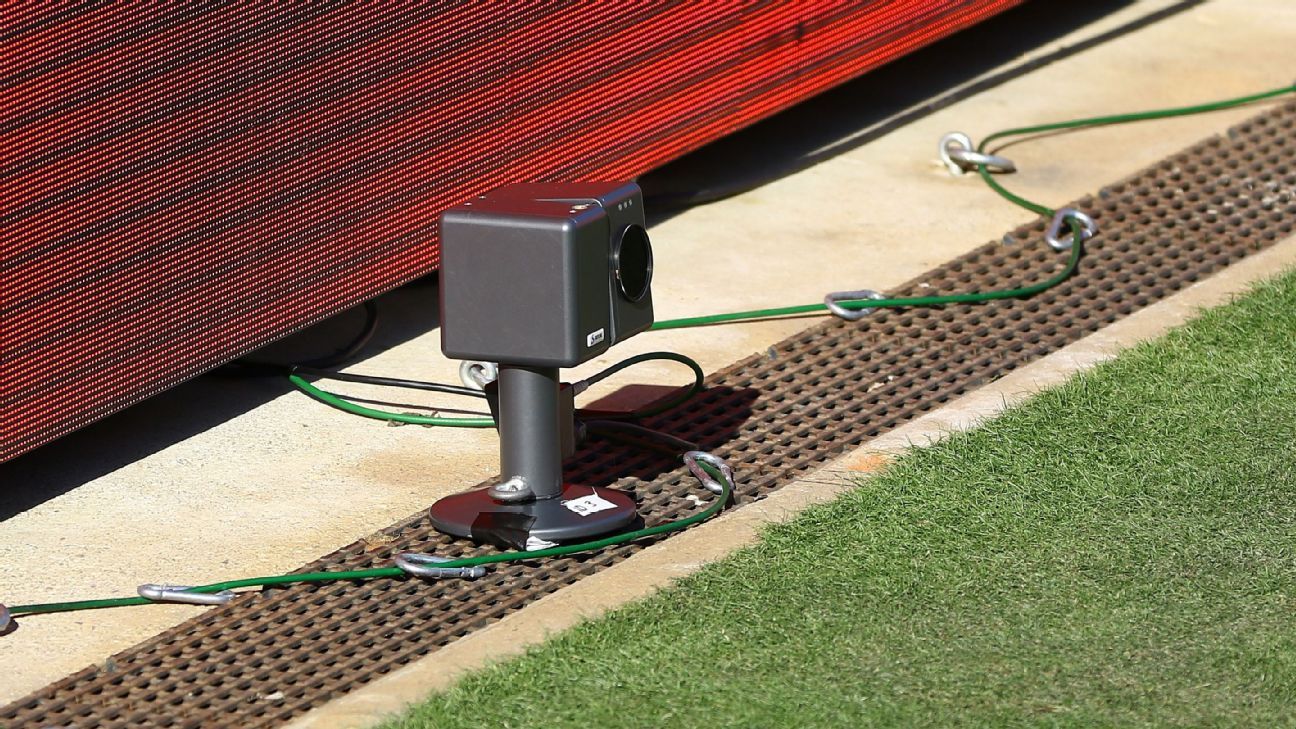
Hawk-Eye’s implementation involves a sophisticated network of cameras and tracking technology. Ben Figueiredo, the director of tennis at Hawk-Eye Innovations, explained, “In total here, we have 204 cameras tracking the ball and the player across all 17 courts at the U.S. Open.
We have 12 tracking cameras around all the courts, along with six foot-fault cameras.” The equipment for a single court costs nearly $100,000 and takes approximately three days to set up. The cameras meticulously track the ball’s movement at 340 frames per second, instantly transferring images to the Hawk-Nest, where precise “in” or “out” calls are made. Figueiredo emphasized, “The accuracy of Hawk-Eye is millimeter-accurate.”
Hawk-Eye, now under the umbrella of Sony since its acquisition in 2011, has become integral to officiating at all major Grand Slam tournaments, except for the French Open, which is played on clay. Figueiredo clarified, “Hawk-Eye is approved on the surface of clay, but it’s the tournament’s choice as to whether they use Hawk-Eye.”

Craig O’Shannessy, director of Brain Game Tennis and a tennis strategy coach, expressed widespread support for implementing Hawk-Eye on clay courts, stating, “Everybody wants it.
We’ve still got too much controversy. It’s time that it’s just a standard across all surfaces and all countries in our sport.”
Hawk-Eye’s success in tennis has also paved the way for its adoption in other major American sports, including the WNBA, MLS, and NFL. Additionally, the NBA has embraced Hawk-Eye technology for skeletal tracking and officiating support in the upcoming season.
Theresa Alesso, president of Imaging Products and Solutions Americas at Sony, highlighted the broader impact of Hawk-Eye technology in sports: “The NBA has chosen Sony and Hawk-Eye technology because it raises the level of their game. Our goal is really to make sports safer, fairer, and more exciting for the fans.”
The sports technology market is poised for significant growth, estimated to reach $25.7 billion by 2030, representing a 26% increase from previous years, according to Meticulous Market Research. Ben Figueiredo noted, “There’s a huge appetite for Hawk-Eye, not just from an officiating perspective but also from a data-collection perspective.”
In conclusion, the U.S. Open’s adoption of Hawk-Eye Live for electronic line-calling in 2022 marked a transformative moment in tennis history. From its humble beginnings in broadcasting enhancement, Hawk-Eye has become an indispensable part of tennis officiating, offering unparalleled accuracy and minimizing controversy.
Its success in tennis has spurred its adoption in other sports, highlighting the growing influence of technology in shaping the future of sports officiating and data analysis. As the sports technology market continues to expand, Hawk-Eye’s impact is poised to grow even further, making sports fairer, more exciting, and safer for fans worldwide.


