


Shein Required to Demonstrate No Forced Labor Before Going Public, State Officials Say.
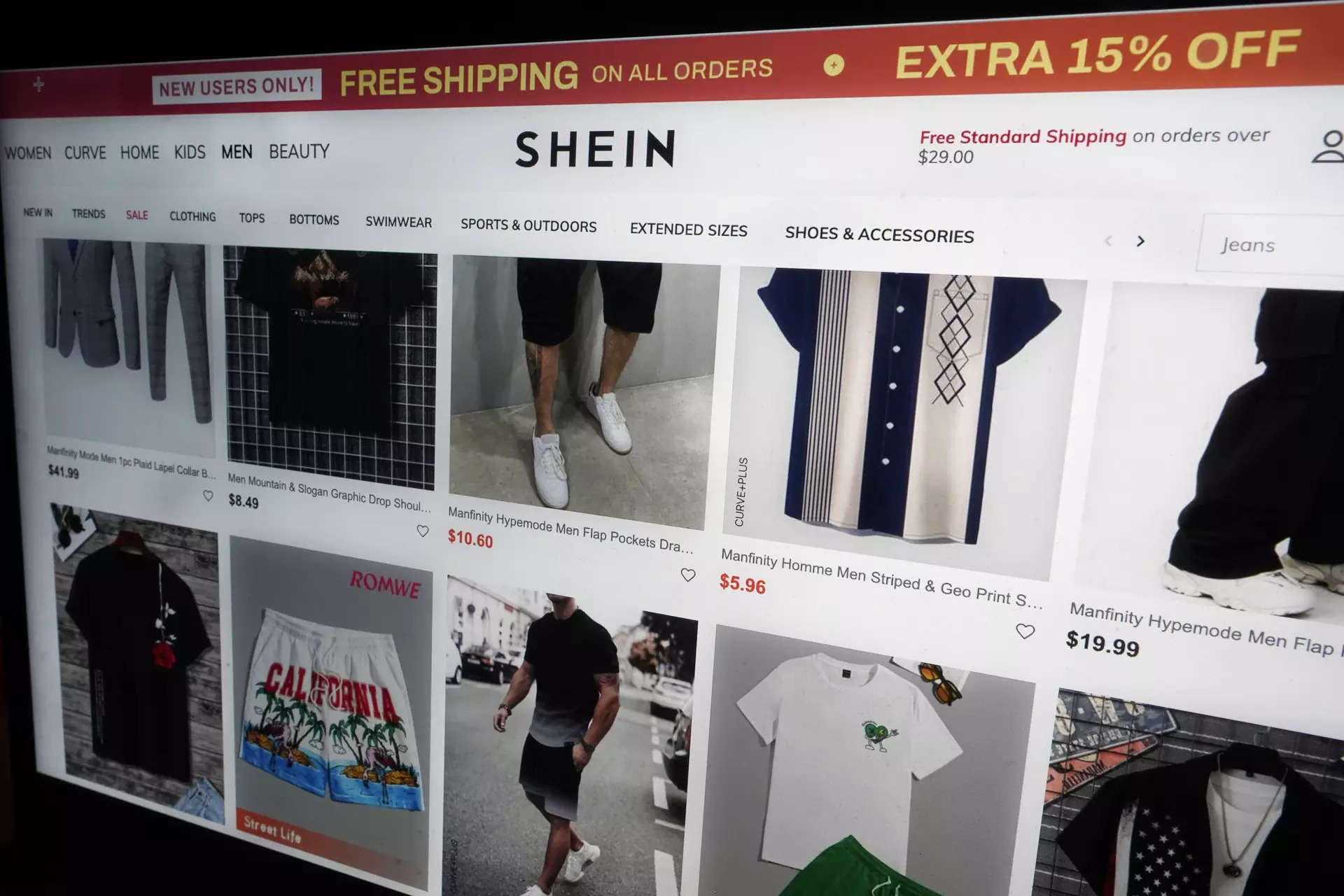
Fast-fashion giant Shein is coming under increased scrutiny from U.S. elected officials who are demanding proof that the company does not employ forced labor before it proceeds with its rumored initial public offering (IPO).
Attorneys general from 16 different states joined forces in writing a letter to Gary Gensler, the Chair of the U.S. Securities and Exchange Commission (SEC), urging the agency to ensure that Shein and other foreign companies are adhering to U.S. laws before they are allowed to trade on American stock exchanges.

The letter highlights concerns about Shein’s intentions to launch a substantial IPO while credible allegations of forced labor within its operations persist. The attorneys general emphasize that such a significant IPO, particularly involving a foreign-owned company facing these allegations, should not be solely based on self-certification.
The signatories of the letter, including Montana’s Attorney General Austin Knudsen and 15 other Republican attorney generals, advocate for a stringent process.
They call for foreign-owned companies to certify, through a truly independent procedure, that they comply with Section 307 of the Tariff Act of 1930. This section explicitly forbids the import of products manufactured either wholly or partly through forced labor.

The letter was dispatched on the same day Shein announced its acquisition of a stake in Sparc Group, the parent company of Forever 21.
Shein’s meteoric rise has been marred by accusations of utilizing forced labor from China’s Xinjiang region, where the company’s supply chain is significantly present.
However, the United States prohibits imports from this region due to extensive human rights violations against the Uyghur population.
Notably, the House Select Committee on the Chinese Communist Party is investigating Shein for alleged evasion of U.S. tariff laws. This inquiry aligns with the growing bipartisan scrutiny of companies with links to China or its government.
The letter references a Bloomberg article from the previous year, which conducted independent tests revealing that certain Shein garments contained cotton from Xinjiang.
These allegations have presented substantial challenges for Shein. Overcoming these accusations is crucial for the company’s expansion in the U.S. and its pursuit of going public.
In response to the Bloomberg report, Shein initially maintained a low public profile. However, the company has since increased its engagement with the press and has conceded to CNBC that some of its cotton supply originates from Xinjiang.
To assess its cotton sources, Shein enlisted Oritain, a supply chain tracing firm capable of pinpointing cotton fiber origins to specific farms. Between June 2022 and July 2023, Oritain conducted 2,111 tests, yielding 46 positive results (a 2.1% rate) from prohibited regions, according to Peter Pernot-Day, Shein’s Head of Strategy and Corporate Affairs, in an interview.
Pernot-Day clarified that these tests target raw materials. When a raw material tests positive, it is immediately excluded from production to prevent its use in products.
Oritain, which positions itself as an independent entity, has previously confirmed these findings to Politico, asserting that Shein’s performance has outperformed the industry average.
The company routinely tests more than 1,000 cotton samples annually. During a recent industry-wide testing phase, Oritain discovered that 12% of samples indicated an origin from an “unapproved region,” as reported by Politico.

Pernot-Day underscored that Shein’s central objective currently is to eliminate positive test results altogether. To achieve this goal, the company is conducting monthly tests on cotton from all 40 of its mills and has ceased purchasing cotton from China entirely.
As Shein navigates these challenges, its response to forced labor allegations and efforts to ensure supply chain integrity are crucial factors determining its future trajectory, especially as it aims to expand its foothold in the U.S. market and progress toward its anticipated IPO.


