


iPhone 15 Rumored to Feature Major Charging Port Upgrade.
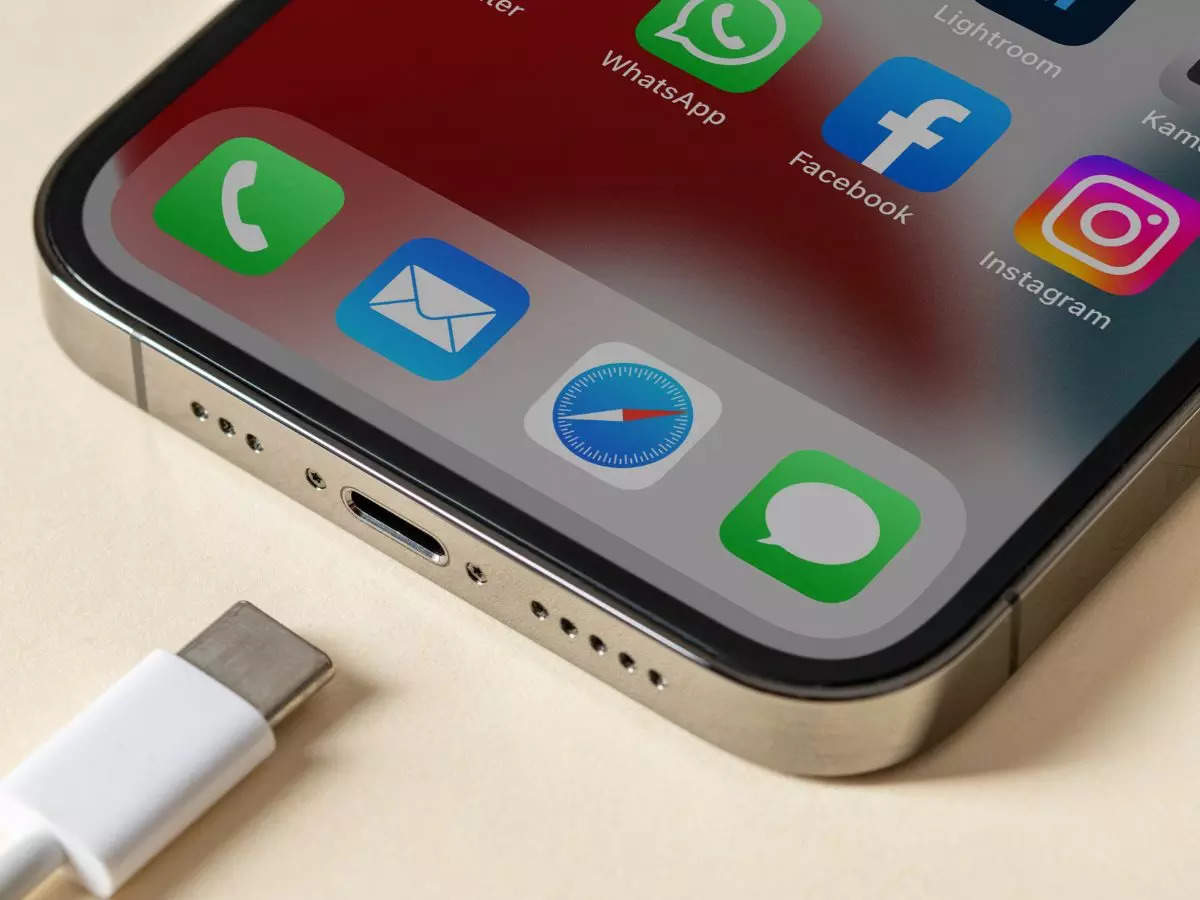
The upcoming iPhone models, anticipated for their regular September release, could introduce an unprecedented feature—a universal charging port. Analysts and media reports suggest that the new iPhones might incorporate a USB Type-C charger port on the bottom of the device.
This move would replace Apple’s proprietary Lightning port, which has adorned every iPhone since 2012.
The potential transition to a USB-C connector is poised to be one of the most significant enhancements to the iPhone lineup in recent years, promising various consumer benefits. With the adoption of a USB-C port, iPhone users would no longer have to carry separate cables for their phones and other gadgets during travel.
Moreover, this change would facilitate cross-compatibility between different devices, allowing Android users to utilize chargers designed for iPhones and vice versa.
Schools and businesses could also streamline their device charging infrastructure by standardizing a single charger type for all their gadgets. Furthermore, adopting USB-C might enable iPhones to access faster charging speeds.

While Apple has yet to officially confirm the inclusion of a USB-C charging port in its new iPhone models and has refrained from commenting on the matter, the transition seems inevitable.
This anticipation stems from a regulation passed by the European Union last year, which mandates the presence of USB-C ports on new smartphones by 2024. Given Apple’s global market presence, it is unlikely that the company would create a separate iPhone model solely for the European market.
Greg Joswiak, Apple’s Chief Marketing Officer, acknowledged the company’s commitment to compliance with the new regulation.
The regulatory shift in the European Union reflects an effort to enhance consumer benefits and mitigate dependency on a single manufacturer. These new regulations are estimated to save Europeans 250 million euros annually on chargers.
Furthermore, the EU has highlighted that outdated chargers contribute to approximately 11,000 tons of electronic waste annually within the region.

However, Apple has expressed opposition to this regulation. In a letter penned in 2021, the company argued that requiring a single connector type across all devices could impede future charging innovations.
Apple raised concerns about potential consequences, including the possibility of prematurely removing widgets from the market and adding confusion for consumers due to the introduction of additional information.
Despite Apple’s reservations, the transition towards a universal charging port is inevitable, given the alignment with regulatory mandates and its potential benefits for consumers.
As the tech industry continues to evolve, the move towards standardization could change how users interact with and charge their devices.

Whenever Apple undertakes changes to the ports featured on its devices, a segment of sceptics tends to suspect that these modifications are primarily aimed at capitalizing on its premium-priced cables, generating additional revenue.
A noteworthy example of this sentiment can be traced back to introducing USB-C chargers to MacBook laptops in 2015. This transition triggered a wave of humorous commentary centred around the necessity of dongles to connect older accessories to the newly adopted USB-C ports.
Similarly, when Apple boldly decided to eliminate the conventional headphone jack from its iPhones in 2016, the move ignited months of passionate discussions in favour of and against this “courageous” alteration.
A prominent point of debate revolved around whether Apple’s motive was to encourage consumers to opt for its higher-priced wireless AirPods. This manoeuvre continues to fuel ongoing deliberations concerning its wisdom, as many Android smartphones have subsequently followed suit in omitting the headphone jack.
While it is true that Apple does derive revenue from the sale of its cables and offers a program termed “Made for iPhone” (MFi), through which accessory manufacturers pay for access to official Apple components, the core strategic objective of the company is to ensure seamless compatibility between its products, thereby minimizing significant discrepancies that could impede the user experience and, consequently, deter the continuous adoption of new iPhone iterations.
Contrary to accusations of mere profiteering from dongles and supplementary accessories, Apple’s overarching focus remains rooted in fostering a cohesive ecosystem that engenders a natural transition for users to newer iPhone models.
It’s worth noting that revenue generated from cable sales is accounted for within Apple’s broader Wearables, Home, and Accessories product line. In the fiscal year 2022, this category reported an impressive $41 billion in revenue; however, it’s essential to recognize that a substantial proportion of this revenue is attributed to Apple Watches and headphones sales.
This figure pales compared to the monumental $205 billion in iPhone sales that Apple declared during the same period. This disparity in revenue underscores the fact that while cable and accessory sales contribute to Apple’s financial landscape, they remain secondary to the towering revenue generated by the flagship iPhone lineup.
In summary, the prevailing scepticism surrounding Apple’s port modifications often revolves around concerns of profit maximization, primarily through accessory sales. Nonetheless, Apple’s underlying strategic intent pivots on synchronising its products to foster user satisfaction and engagement, a perspective that sets it apart from opportunistic business practices.
The substantial discrepancy in revenue between accessory sales and iPhone sales underscores the centrality of iPhones in Apple’s revenue model. It affirms the company’s commitment to enhancing its products’ user experience.
The potential drawbacks of Apple’s decision to transition to a new charging port are not to be dismissed, and Apple’s argument concerning possible confusion gains validity in this context. In contrast to the proprietary nature of the Lightning port, the USB-C port presents a distinct paradigm.
The Lightning port mandated that companies seeking to produce officially approved accessories engage with Apple’s program, incurring costs for access to specifications and authorized Apple components. This framework provided consumers with a measure of assurance—devices purchased from most stores, be it docks, clocks, or cables, were guaranteed to be compatible.
However, the transition to USB-C ushers in a different landscape. USB-C operates under the umbrella of a “standard,” a collaborative effort involving numerous companies and individuals, resulting in the publication of precise specifications.
This shift in dynamics translates to an environment where anyone can leverage these specifications to craft cables sans enrollment in an Apple-administered initiative.
The ramifications of this shift are multifaceted. Many iPhone users may find themselves grappling with the realization that not all USB-C cables are created equal. Variations abound regarding data transfer speed, functionality, and potential compatibility issues.
Early iterations of the standard were even plagued by instances where ill-configured cables could harm devices, although such occurrences have diminished over time. Some lines support advanced features like “Thunderbolt,” a potent data transfer standard geared towards high-performance peripherals like monitors or docking stations.
This, however, often comes at a premium. A selection of websites is dedicated to assessing and endorsing cables that adhere to the “compliant” status within the USB-C standard.
Apple will likely communicate cable suitability for iPhone charging through software warnings, in-store guidance, and its MFi (Made for iPhone) program. Nonetheless, the shift in charger ports introduces the potential for irritating scenarios that were relatively absent during the era of Apple’s proprietary charger.
Apple’s troubleshooting resources for USB-C charging concerns for Mac devices advise users to test the scenario using Apple’s authorized cables and power adapters.
The transition to USB-C charging ports on iPhones won’t herald an immediate transformation. Apple persists in developing its proprietary charging protocols, evident in technologies like MagSafe, which utilizes magnets to affix a charging puck to the back of iPhones, and the distinct magnetic charger employed by the Apple Watch.
Despite adopting USB-C as the solitary charging port for its MacBook laptops for an extended period, Apple recently introduced a proprietary magnetic charging mechanism for its recent models.
Anticipations among Apple enthusiasts speculate that the company might eventually endeavour to eliminate ports from iPhones. Until such a time arrives, users invested in various Apple products will remain burdened with the need to carry an assortment of distinct charging cables.
Notwithstanding these intricacies, the introduction of the USB-C port marks a progressive stride for iPhone users, even as Apple grapples with the process.
Apple’s preference for a strategy that standardizes charging bricks while allowing cable differentiation based on device type signifies an effort to accommodate over a billion users equipped with the existing connector, mitigating disruption, as highlighted by Greg Jozwiak, Apple’s Senior Vice President of Worldwide Marketing, in 2022.
This nuanced transition underscores Apple’s pursuit of harmony between innovation and user convenience.


